
Any construction accident is bad enough. Getting the call that a construction crew member has fallen off a roof is a contractor’s worst nightmare.
A fall from the height of something like a residential roof is scary, but commercial and industrial buildings are often three stories tall or more. Luckily, there are simple ways to keep your workers safe while on a flat roof.
A rooftop warning line system (also known as a fall protection warning line) is an easy way to cordon off unsafe areas of your roof while workers are operating nearby.
- Roof work is risky, but improving safety can be simple.
- Roof warning line systems combine visibility and physical boundaries.
- Proper fall protection is critical for solid compliance.
- Portable, easy-to-move systems improve real-world usability.
Why is fall protection important?
According to the NAICS surveys, over 8.33 million American construction workers were employed in 2023, and many had to work from great heights such as roofs. Regardless of how well-trained a construction worker or roofer is, working on any roof can be dangerous. A fall from a roof can cause devastating injuries and even fatalities. With a roof warning line system, you can enhance the safety of your crew.
Aside from the obvious risk to your crew’s well-being, there are regulatory and legal issues to consider. Whether due to hazardous equipment or risk of fall, failure to maintain proper roof warning line systems can expose you to fines and legal liability (see OSHA regulations 29 C.F.R. § 1926.502(f) and its subparts). These regulations include establishing clear barriers and ensuring that workers are safe. If your construction project violates OSHA regulations, your project won’t just be subject to fines, but production delays and even a potential shutdown.
How does a roof warning line system work?
A solid fall protection line needs two components:
- A visual signal of danger
- A physical impediment or delineator
Signage in a work area should clearly mark any hazardous regions of the roof like electrical equipment and exposed/unfinished openings in the roof. It may also warn where the edge of the roof is, depending on context.
The warning line system itself is usually brightly colored (often red, orange, or yellow) and provides a visual cue of both the location of danger (beyond the protective line) and the safe path (in front of the line).
The physical presence of the warning line is also essential. It makes it far more difficult to accidentally walk into a hazardous area. It’s essentially a portable fence, in this case.
Designated Work Space
There are also more practical effects for roof warning lines, like simply designating a safe work area for your team when you’re sharing space with pedestrians and other non-crew members.
You can use the easy mobility of a good roof warning line system to effectively circle off the designated workspace on a roof. With a designated workspace, it’s easy to control nearby foot traffic. After all, the system creates clear boundaries so people working in the area have a specific safety zone. Anyone not working with them understands not to penetrate that barrier.
Roof Warning Lines the RubberForm® Way
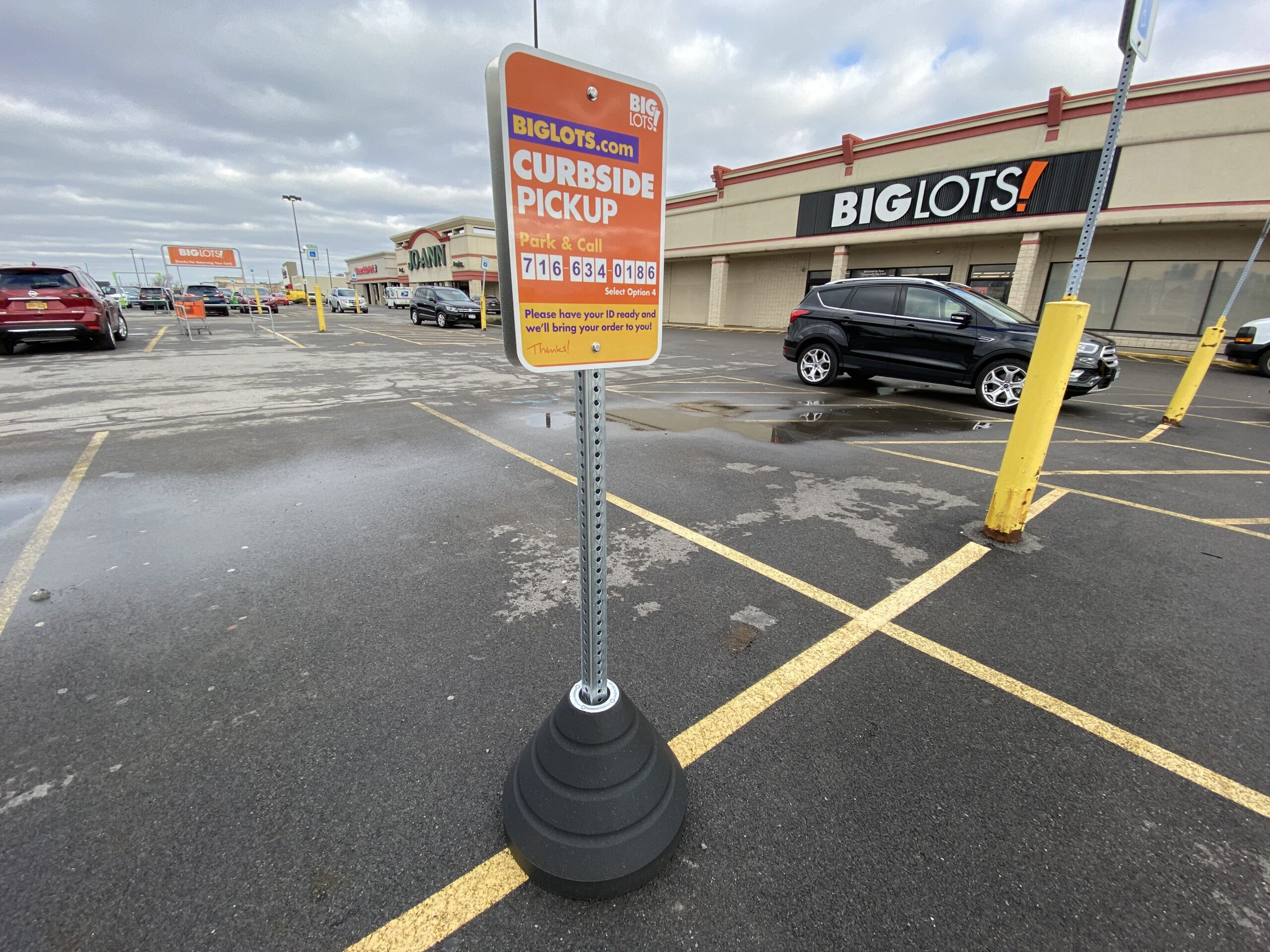
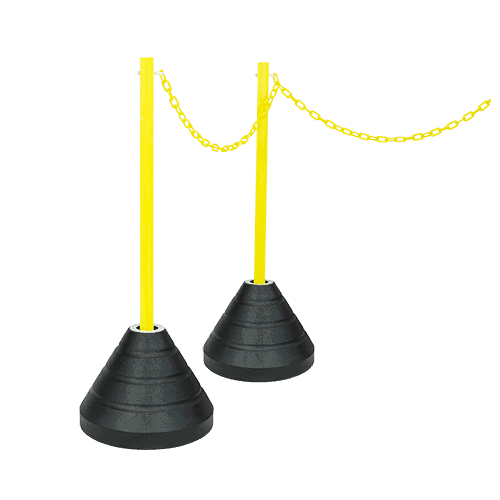
What makes our RubberForm® Roof Warning Line Systems different? We based ours on our beloved parking lot sign bases (our very first product). The bases are heavy enough to stay in place in wind, rain, and snow. Their low center of gravity makes it really difficult to blow over. But that doesn’t mean they’re hard to move by hand.
All our warning line bases are round. That means all you have to do is tip them over and roll them into position. If you ever need to relocate your fall protection lines (and if you’re on a construction crew, you’ll do this all the time) all you need to do is tip and roll each base again. Each base has a pole with a chain connected between them. The whole thing is painted yellow for maximum visibility.
Nothing in our roof warning line systems will either rust or conduct electricity (important when you’re working up high on a roof). The base is recycled rubber, the post fiberglass, and the chain is a durable plastic.
How to move a roof warning line base:
- Tip
- Roll
- Leave
- (Yes, it’s that easy!)
The Benefits of Effective Roof Safety
Reducing the likelihood of injuries, fatalities, and fines means you can ensure your construction project doesn’t go over budget. After all, as long as the workers are safe, you’ll reduce the likelihood of any workers’ compensation claims. Plus, production won’t ever have to shut down because of such injuries or accidents.
A roof warning line system is effective for any rooftop construction work. It prevents workers from safety issues such as devastating falls. It can also make their job more effective by creating a designated work zone that won’t be violated by non-workers. Working on a roof, or from any height, has its unique challenges, and one of the best ways to handle it is by ensuring everyone’s safety.
When you’re ready to take the headache out of flat roof safety for construction, industrial, or commercial facilities, give us a call.
Date Published: March 11, 2024